Risk reduction questions often describe a preventable problem before an injury or incident occurs. The challenge is to identify the exposure, choose an action that changes it and avoid promising that prevention can eliminate every adverse outcome. For BOC preparation, work from the current Risk Reduction, Wellness and Health Literacy domain and practice matching a proposed action to the specific gap in the scenario.
Find the exposure before the symptom
Start by separating the hazard, the person exposed and the circumstances that make the exposure relevant. A change in venue, schedule, equipment or communication can create a problem even when nobody currently reports symptoms. If a question tells you that a procedure has not been checked at a new location, that missing check deserves attention. Do not wait for an injury to make the system issue visible.
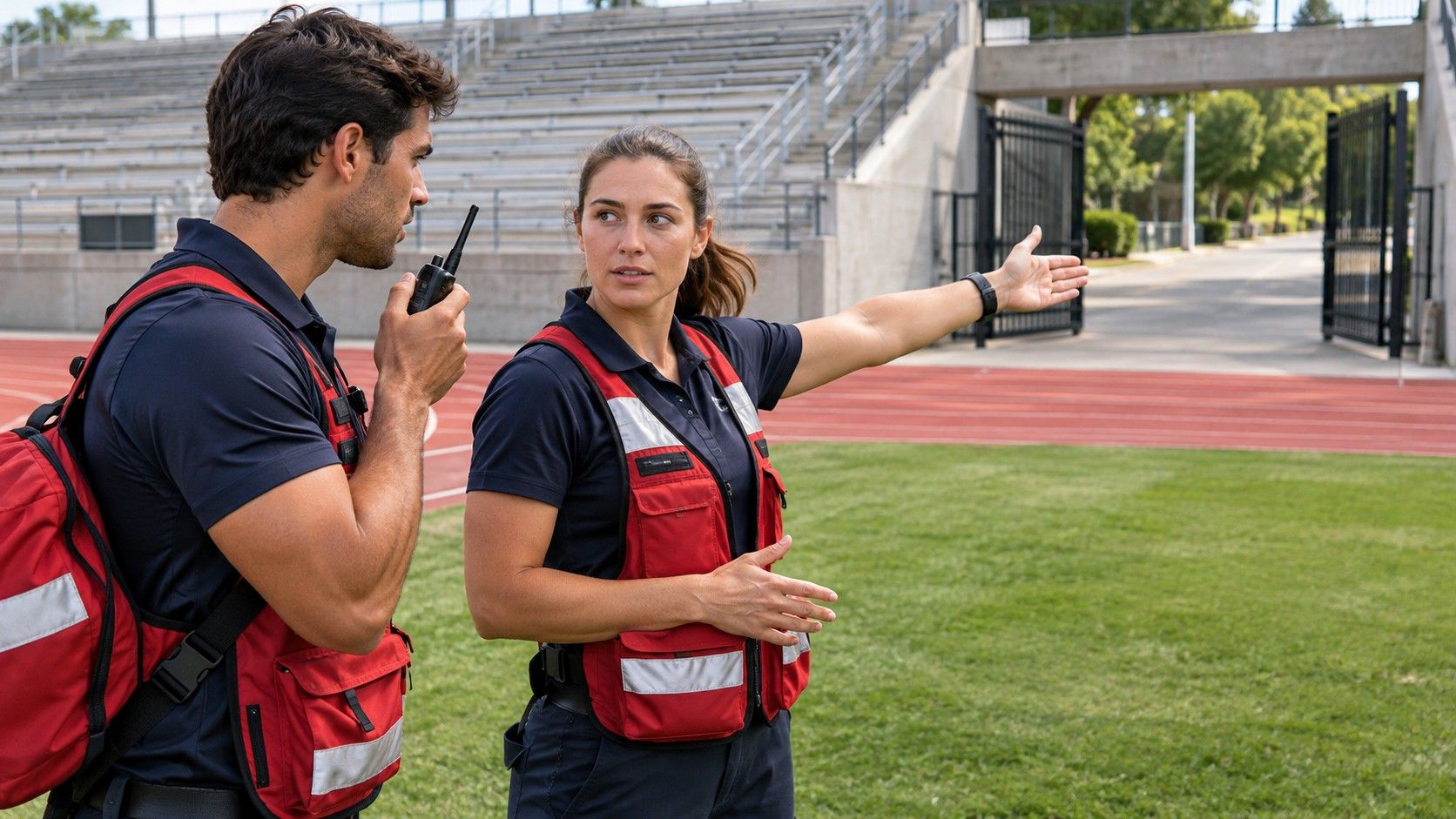
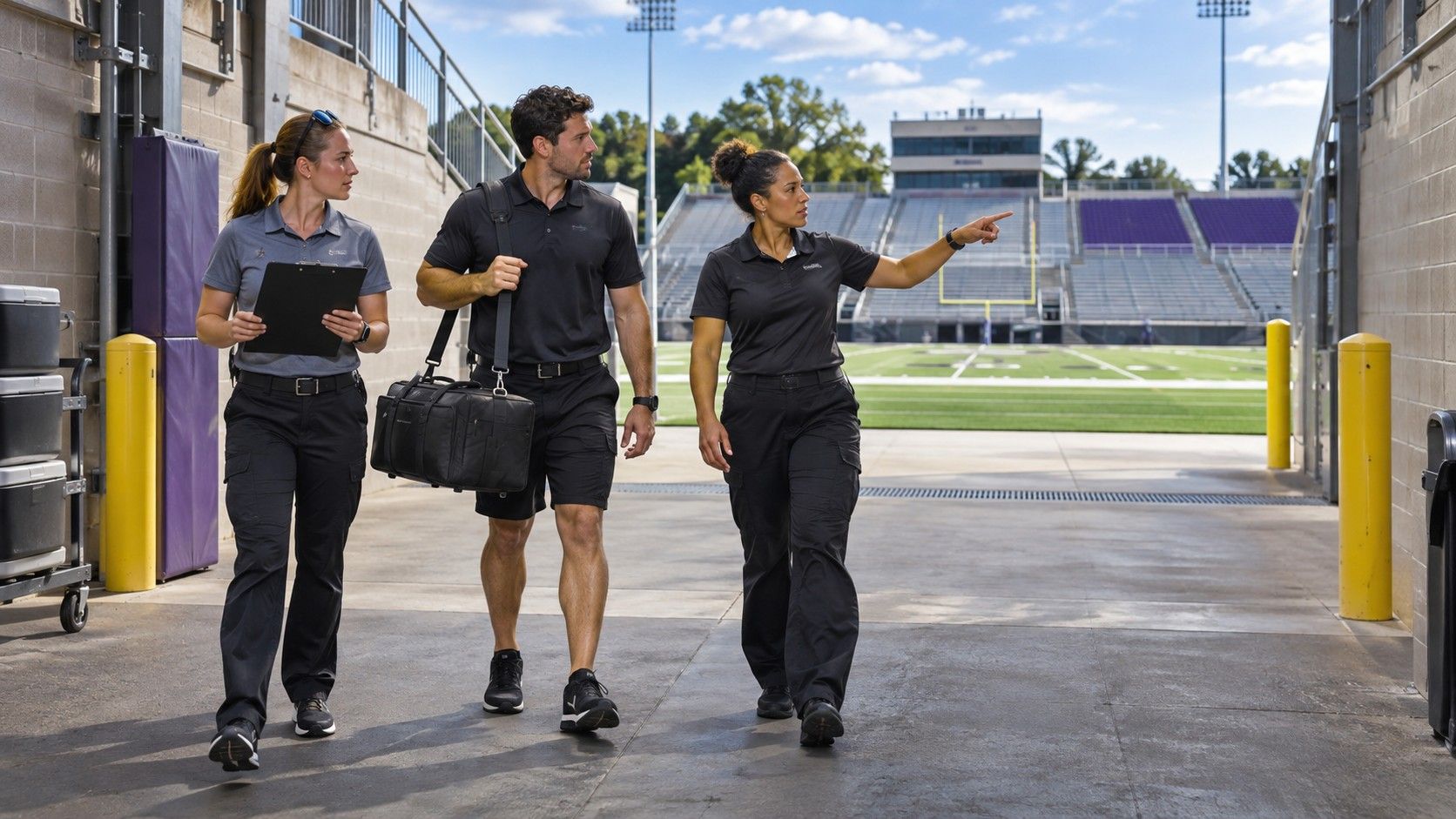
Consider an original learning scenario in which a group uses a different facility for a training session. Staff know the general plan but have not confirmed access arrangements or equipment locations. The useful question is not which injury is most common in that sport. It is whether the site-specific plan is operational. This distinction helps you select an answer that addresses the supplied exposure instead of an unrelated prevention habit.
Write the exposure as a short causal statement: an unconfirmed access route could delay a response, or an unclear responsibility could leave a task undone. Such statements make your reasoning testable. If the proposed answer would not alter that chain, it may be relevant to wellness generally but weak as a response to the question. Avoid adding facts about the setting that were never provided.
Choose a practical prevention step
A prevention measure should have a purpose, a responsible person and a way to check whether it was implemented. Telling a team to be safer is difficult to evaluate. Confirming a procedure, assigning responsibility and rehearsing the task creates observable evidence. In examination scenarios, prefer the level of specificity supported by the case rather than a slogan or a detailed protocol that belongs to a different setting.
Distinguish measures aimed at the environment from those aimed at individual behavior. A communication failure cannot always be repaired by educating the patient, and a patient understanding problem cannot always be repaired by buying equipment. Ask which part of the system the question identifies as weak. A well-designed answer connects its action to that weakness and acknowledges the limits of the change.
When reviewing a possible intervention, consider unintended effects and feasibility. A proposed procedure that nobody can carry out with the available staffing is not operational merely because it sounds comprehensive. A screening or education program also needs a process for responding to what it finds. Use these considerations to evaluate options, without inventing a local policy or substituting general study material for the actual rules of a clinical placement.
Separate screening from diagnosis
Screening can identify a reason for further assessment or a possible need for referral. It does not automatically establish a diagnosis, clear every person for every activity or guarantee that an adverse event will not occur. Questions may exploit this boundary by offering an answer that makes a stronger claim than the information supports. Read the wording carefully, especially words that imply certainty or universal permission.
Suppose an original scenario says that a screening process identifies a concern requiring follow-up. A defensible response would acknowledge the concern and follow the relevant assessment or referral pathway. It would not treat the screening result as a complete diagnosis. Equally, a result without a flagged concern should not be interpreted as proof that no risk exists. The meaning depends on the purpose and limits of the process.
For your study notes, create two columns: what the finding supports and what it does not establish. This exercise is useful across many risk reduction topics. It prevents a familiar term from carrying an unjustified conclusion. Check the exact procedures in current educational references and local policy where relevant, because the present discussion teaches a reasoning boundary rather than a universal clinical screening algorithm.
Communicate risk without guarantees
Risk communication should help a person understand a decision, ask questions and know the next step. It should not rely on fear or reassurance that exceeds the evidence. In an examination scenario, an answer may be weak because it dismisses a concern, uses unexplained technical language or promises complete protection. A clearer response explains the issue in terms the person can use and checks understanding.
Teach-back can reveal whether the explanation was understood, but it should not be framed as a test the patient must pass. Ask the person to describe the plan in their own words so the clinician can improve the explanation. If a patient repeats an incorrect assumption, clarify it respectfully. The aim is shared understanding, not proof that the clinician delivered a long enough speech.
Health literacy also concerns the accessibility of the system. Instructions may be technically accurate yet difficult to locate, read or act on. An original case might describe a patient who cannot explain what to do after leaving the clinic. Repeating the same document more loudly is unlikely to address the gap. Think about language, format, opportunity for questions and the ability to carry out the next step.
Test your reasoning with a new case
Original scenario: several patients receive correct written instructions, but follow-up conversations show that they misunderstand which change should prompt contact with the care team. Which revision most directly targets the problem? Compare simply adding more pages with revising the explanation, highlighting the decision point and checking understanding. The latter addresses the observed misunderstanding; more text alone may increase the burden without improving the decision.
Now change the facts. If patients understand the instructions but cannot reach the designated contact, the primary gap has moved from understanding to access. A strong answer should change with the scenario. This is why memorizing a favorite prevention phrase is unreliable. The same broad domain can contain environmental, organizational and communication problems that require different responses.
After each case, state the exposure, the proposed action, the person responsible and the outcome that would show the process improved. Keep the outcome realistic: clearer understanding or a successfully rehearsed role is evidence about that process, not a guarantee of zero future injuries. Use these distinctions to write concise rationales and to decide which source you need to consult next.