An athletic training practice question is useful when you can explain the decision and identify why another plausible choice fails. The original scenarios below are independent learning exercises, not BOC examination items or a prediction of your result. Use them to inspect your reasoning, then check the relevant principles against current educational resources and the BOC content outline.
Separate practice from prediction
Before answering a case, write down the task in plain language. Is the question asking for an immediate priority, an assessment choice, a progression criterion or a communication response? An answer can be clinically relevant yet fail to address that task. Also note the setting and the information that is missing. You should not quietly invent a normal finding, a completed emergency response or a permission that the scenario never supplies.
For additional independent questions organized around the examination, the athletic training practice questions on Strength & Conditioning Certification provide another resource to review. Keep any independent practice separate from official BOC materials. BOC explains that its own self-assessment performance does not predict certification exam performance, and its copyrighted items must not be copied or distributed.
Use a simple answer record: selected option, reason, confidence and the fact that would change your choice. This record is more informative than a list of letters. If you return to the same question after memorizing the answer, use a changed case to check whether you learned the principle. Recognition of a familiar sentence is not equivalent to applying the principle independently.
Work through a risk reduction case
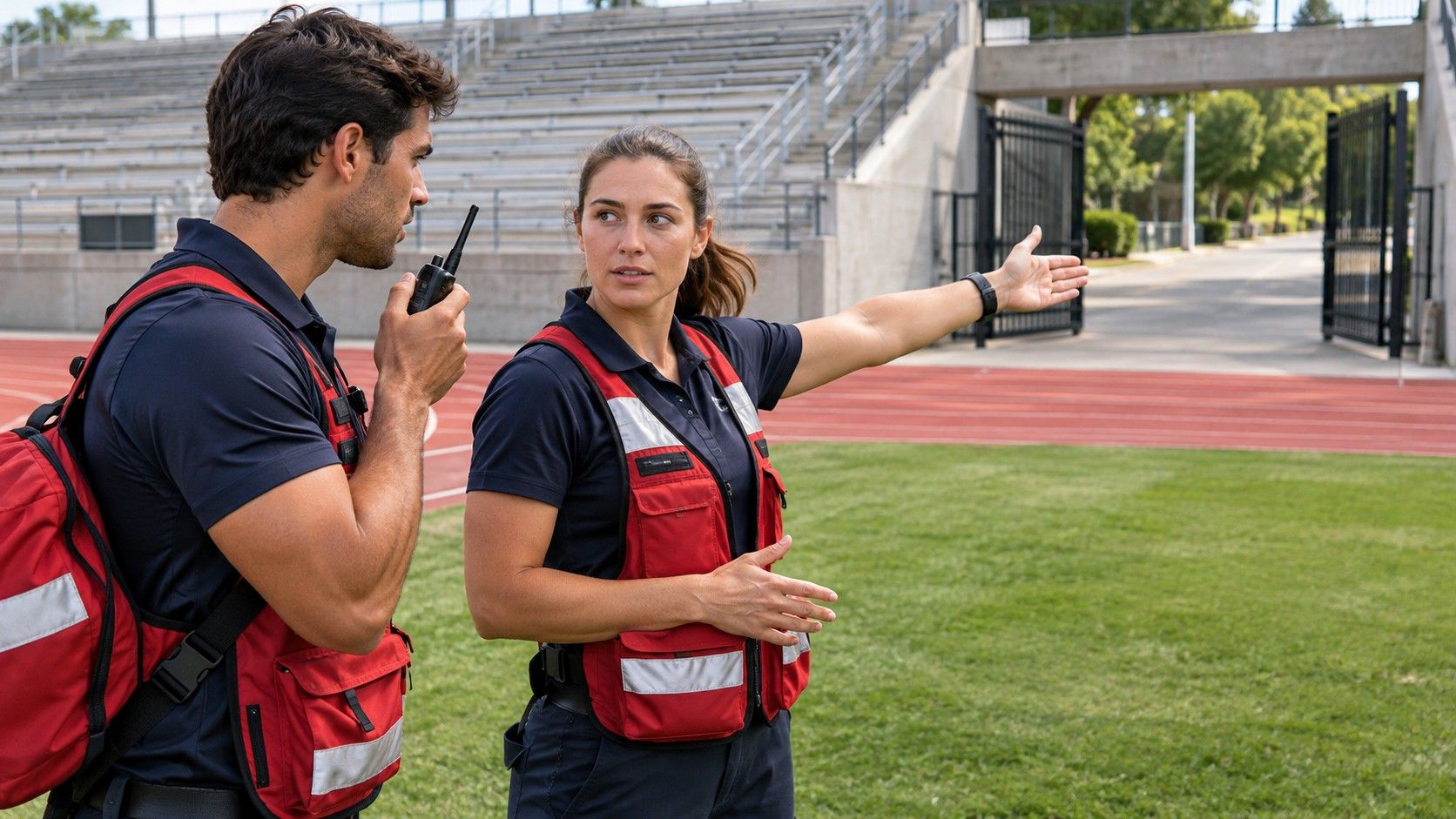
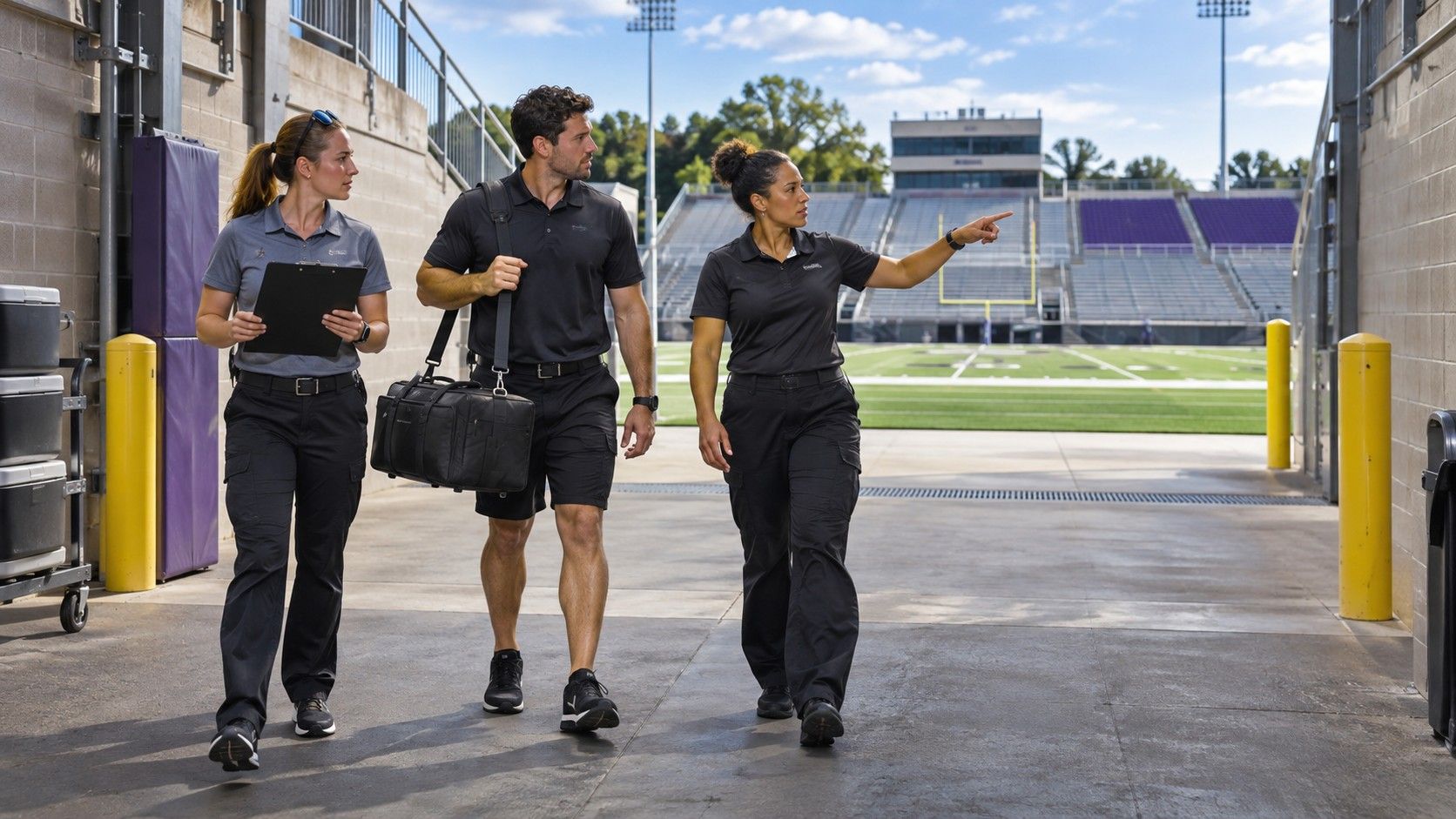
Original case: a team moves practice to a venue that has not been used this season. The staff has a general emergency action plan, but the vehicle access point and the person assigned to meet responders have not been confirmed. Which action most directly addresses the identified system gap? A: assume the usual venue instructions apply. B: verify the access route and assign the communication and arrival roles for this venue. C: add a longer warm-up. D: ask athletes to bring extra tape.
B is the best answer because it targets the missing operational information. The question concerns readiness at a changed location, not a general injury-prevention activity. A leaves the uncertainty unresolved. C and D may relate to other aspects of preparation, but neither tells responders how to reach the patient or establishes who will guide them. The important distinction is between an action that sounds sensible and one that addresses the actual gap.
Change the case to test the principle: suppose access and roles have been confirmed, but an essential piece of equipment is unavailable. Repeating B from memory is no longer enough. The next question would concern the equipment gap and the applicable plan. Practice should teach you to respond to the supplied facts rather than to associate every venue question with the same phrase.
Analyze an assessment case
Original case: a patient describes discomfort during a particular movement. The history is incomplete, and two possible explanations would lead to different assessment priorities. Which approach is most defensible? A: select a diagnosis from the location alone. B: perform every test remembered from class. C: clarify the history and choose findings that help distinguish the competing explanations. D: ignore the history because physical tests are objective.
C is best because assessment should reduce a relevant uncertainty. A substitutes an early label for a reasoned process. B may collect large amounts of information without a clear purpose, while D discards information needed to interpret findings. The case does not supply enough detail to recommend a specific maneuver or diagnose a condition, so the explanation should remain at the level supported by the scenario.
A useful follow-up is to ask what new information would change the priority. A concerning change in symptoms may alter the need for referral or escalation; a stable, well-described pattern may support a more focused assessment sequence. Do not convert this educational exercise into instructions for managing a real patient. In practice, professional scope, supervision and the clinical context remain essential.
Compare emergency and rehabilitation decisions
Original case: during a rehearsal, two staff members assume the other person will contact emergency services. What is the most useful correction? A: tell everyone to be more careful. B: assign and rehearse an explicit communication role with a confirmation method. C: remove the communication task from the plan. D: rely on whoever happens to be nearest a telephone. B addresses the ambiguity directly and can be tested during another rehearsal. A provides no operational change, while C and D preserve or worsen the problem.
Now consider a separate rehabilitation case: a patient has reached the planned calendar week, but the stated functional criterion for the next activity has not been met. Which response best fits a criterion-based plan? A: progress automatically because the week has arrived. B: ignore all time-related considerations. C: review the unmet criterion and response to the current load before deciding the next step. D: substitute the patient's preferred activity without reassessment. C is the strongest answer within the information supplied.
These cases use different reasoning. The first asks how to repair a system responsibility; the second asks how to justify progression. A candidate who treats both as generic patient-safety questions may choose a vague answer. Describe the specific failure mechanism before selecting a response. Calendar information can matter, but it does not erase the other requirements of a defensible progression decision.
Review mistakes with an evidence log
After checking an answer, write one correction that would help with a new problem. For the venue case, the correction might be: a location change requires confirmation of the location-dependent parts of the plan. For the assessment case, it might be: choose information that separates plausible explanations rather than collecting tests without a question. These corrections preserve the reasoning without reproducing an official question bank.
Classify errors honestly. Missing a key qualifier is different from not knowing the underlying principle. Choosing an action outside the requested time point is different from choosing an unsafe action. Overconfidence deserves attention even when the final choice happened to be correct. Track those patterns across several sessions before deciding what to study next.
End the review by writing a fresh variation and explaining the answer without options. If you cannot do that, return to the relevant source and identify the remaining uncertainty. Original practice is most useful as a cycle of attempt, explanation, correction and transfer. A rising score on repeated familiar questions alone gives a much narrower picture of what has changed.